
Preserving Family Heirlooms: When Sentimental Value Becomes a Family Battlefield

When families think about estate planning, they often focus on major assets such as homes, investment accounts, retirement savings, and life insurance proceeds. Yet some of the most emotional and bitter disputes arise not from wealth, but from items that may have little monetary value and tremendous sentimental significance.
Preserving family heirlooms, like a grandfather's military medals, a mother's wedding ring, a century-old dining table, a collection of family photographs, or even a handwritten recipe book can become the center of a conflict that fractures family relationships for years.
It is a painful irony. The very possessions that symbolize family history, love, tradition, and shared memories often become the source of resentment and litigation after a loved one's death. Families who once celebrated holidays together may suddenly find themselves arguing over who deserves a treasured heirloom, what promises were made during a parent's lifetime, or whether one sibling has unfairly taken items before an estate is settled.
"The emotional assets in an estate are often far more significant than the financial assets," said Professional Fiduciary and Certified Elder Law Attorney RJ Connelly III. "Families rarely go to court over a kitchen table because of its value. They go to court because of what that table represents. Understanding how heirloom disputes arise and proactively addressing them is one of the most overlooked aspects of comprehensive estate planning."
A Connecticut Family Torn Apart by Treasured Possessions
Several years ago, a family in Connecticut experienced a situation that perfectly illustrates how quickly heirlooms can divide even a close-knit family. Margaret, an eighty-three-year-old widow from eastern Connecticut, passed away after a brief illness. She left behind three adult children: Susan, Michael, and Jennifer. Throughout her life, Margaret had accumulated numerous family treasures. There were antique clocks passed down from her grandparents, a collection of hand-sewn quilts created by her mother, military memorabilia belonging to her late husband, and hundreds of family photographs dating back generations.
Her estate was relatively modest. Her home was sold, and the remaining financial assets were divided equally among the children. On paper, everything appeared straightforward.
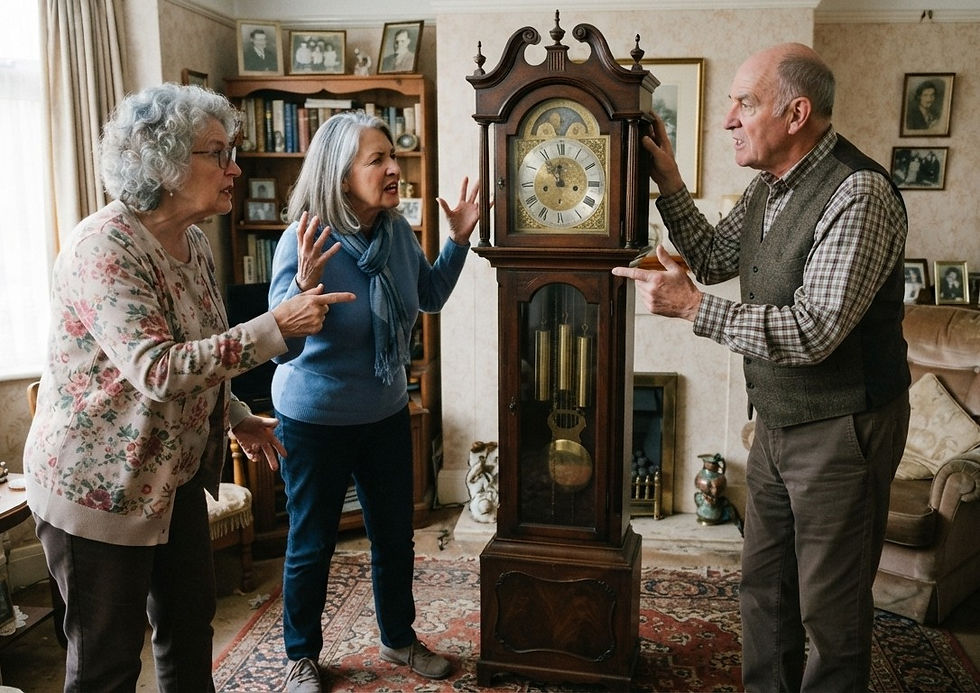
The problems emerged when the family began sorting through personal belongings. Susan recalled being told she would inherit the antique grandfather clock that stood in her mother's foyer for decades. Michael insisted their father had promised him the clock years earlier. Jennifer claimed neither sibling should receive it because it represented the entire family's history. Similar disagreements arose regarding jewelry, photographs, military medals, and furniture.
What began as uncomfortable conversations quickly evolved into accusations of favoritism and broken promises. Family gatherings became tense. Phone calls ended in arguments. Attorneys became involved. Valuation experts were hired. Mediation sessions were scheduled.
The estate ultimately spent nearly $25,000 in legal fees and professional costs attempting to resolve disputes involving property worth significantly less. The emotional damage was far worse than the financial loss. Siblings who had celebrated holidays together for decades stopped speaking to one another. Years later, some relationships had still not recovered.
The tragedy was entirely preventable. Margaret had executed a Will but had never specifically documented her wishes regarding personal property. She assumed her children would "work it out themselves." Unfortunately, many families make the same assumption.
Why Heirlooms Create Such Powerful Emotions
Unlike financial accounts, family heirlooms carry stories, memories, and a shared sense of identity that often cannot be measured in dollars and cents. A wedding ring may remind a daughter of the enduring marriage her parents built together. A watch may symbolize a grandfather's service during World War II and the sacrifices he made for future generations. A dining room table may bring back memories of holiday gatherings, milestone celebrations, and countless family dinners. Because the value of these items is rooted in emotion rather than monetary worth, family members often view them through very different perspectives.
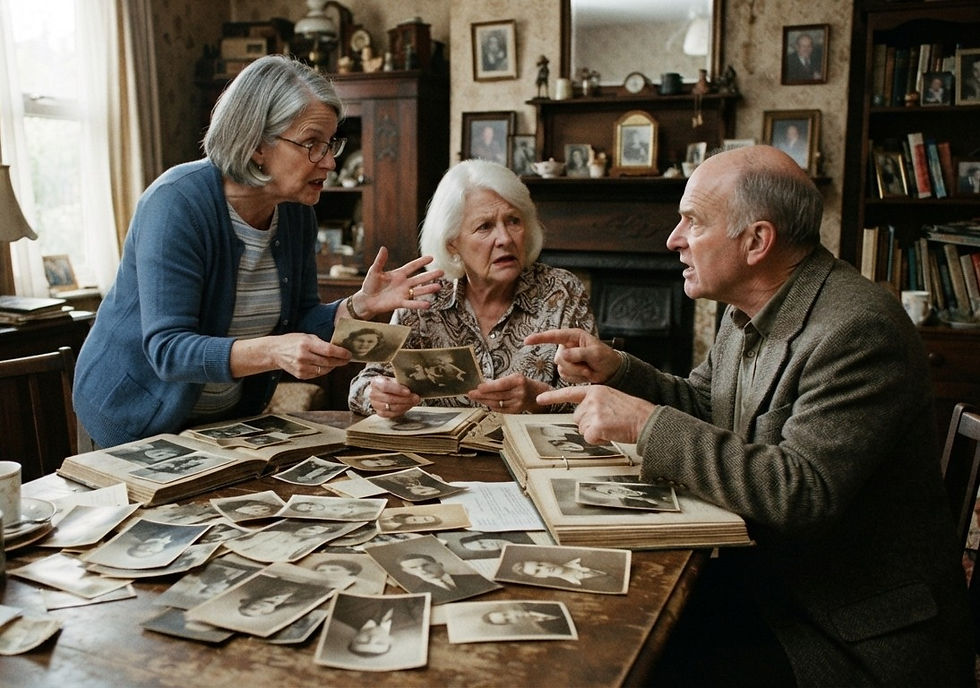
One sibling may desire a particular heirloom because of a deeply personal connection to a parent, while another may feel that years spent providing care entitle them to receive certain possessions. A third family member may view the item as part of the family's collective history and believe that no single individual should have exclusive ownership. These differing perspectives can create tension, particularly when expectations have never been clearly discussed or documented.
Complicating matters further, heirloom disputes often become intertwined with long-standing family dynamics. Sibling rivalries, perceived favoritism, childhood grievances, and disagreements over caregiving responsibilities can resurface during estate administration, sometimes with surprising intensity. What appears on the surface to be a disagreement over a piece of jewelry, furniture, or memorabilia is often about something much deeper.
As Attorney Connelly explains, "The dispute is rarely about the object itself. The heirloom becomes a symbol. It represents love, fairness, recognition, or family history. That's why these disagreements can become so emotionally charged. Through that lens, it's easier to see why even the most modest family possessions can become the focus of significant conflict, and why thoughtful planning is so important to preserving both treasured heirlooms and family relationships."
The Worst-Case Scenarios
When heirloom disputes are ignored or poorly managed, the consequences can be devastating for both the estate and the family members left behind. In some situations, relatives begin removing personal property from a loved one's home before the estate has been formally opened or before an executor has had the opportunity to inventory and safeguard the assets.
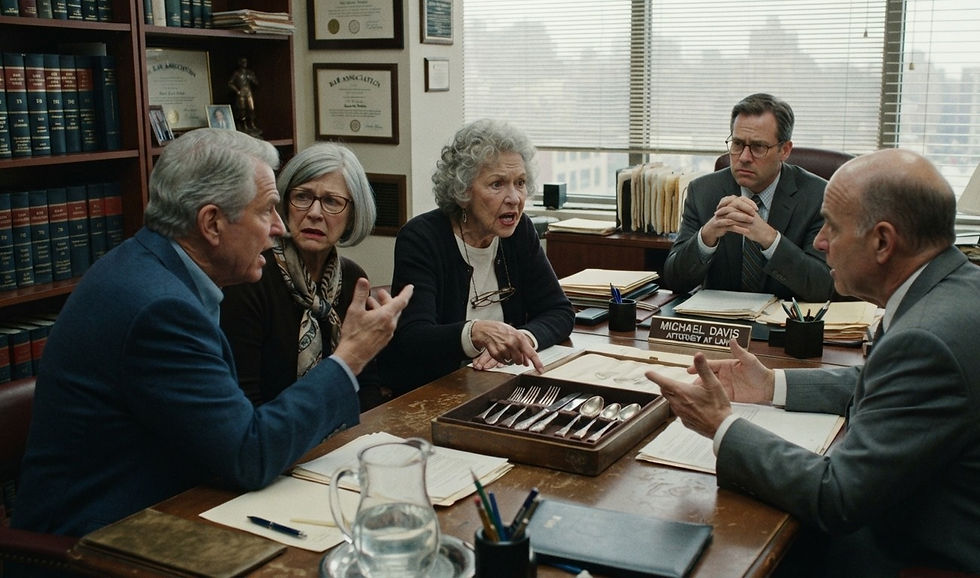
These actions can quickly lead to accusations of theft, favoritism, or misconduct, setting the stage for litigation among beneficiaries. Executors may also find themselves the target of legal challenges when family members believe heirlooms have been distributed unfairly or contrary to a parent's wishes. As a result, an estate administration that should have been resolved within a matter of months can stretch into years of conflict and uncertainty.
The financial consequences can be significant. Families may spend tens of thousands of dollars on attorneys, appraisers, mediators, expert witnesses, and court costs in an effort to resolve disputes involving items that often have far greater sentimental value than monetary worth. Yet the emotional toll is frequently even more severe than the financial expense.
Elder law attorneys routinely witness siblings who once shared close relationships stop speaking to one another over disagreements involving jewelry, family photographs, antiques, or furniture worth only a fraction of the amount spent fighting over them. Unfortunately, these conflicts do not always end with the immediate heirs. Children and grandchildren can become drawn into the dispute, allowing bitterness and resentment to spread across multiple generations.
Perhaps the most heartbreaking consequence is that the deceased person's legacy becomes overshadowed by controversy. Instead of gathering together to celebrate a loved one's life, values, and contributions to the family, relatives become consumed by arguments over possessions and perceived injustices. The memories that should bring comfort and connection are replaced by stories of conflict and legal battles. In these situations, the family heirlooms that were meant to preserve history and strengthen family bonds become painful reminders of division, leaving a legacy of discord rather than one of love and unity.
The Financial Cost of Family Conflict
Heirloom disputes can become surprisingly expensive, often consuming far more resources than families ever anticipated. What may begin as a disagreement over a piece of jewelry, a set of military medals, or a cherished family photograph can quickly escalate into a legal battle involving attorney consultation fees, mediation expenses, appraisal costs, probate administration delays, and litigation expenses. These costs can rapidly deplete estate assets that were intended to benefit loved ones rather than fund prolonged conflicts.

Throughout southern New England, and around the country, contested probate matters can cost thousands of dollars to resolve, even when the disputed property itself may have relatively little monetary value. In more complex cases, expenses can rise into the tens of thousands of dollars, particularly when multiple family members retain separate counsel, and the matter becomes increasingly adversarial. If a dispute progresses into formal litigation involving discovery, depositions, court appearances, expert testimony, and trial preparation, legal costs can escalate rapidly and place a significant financial burden on everyone involved.
Yet the financial impact is only part of the story. Beneficiaries often lose something equally valuable: time. An estate that should have been settled within a matter of months can remain tied up for years while disputes are resolved. During that period, stress levels rise, relationships deteriorate, and families find it difficult to move forward emotionally. The grieving process is often interrupted by ongoing arguments, legal proceedings, and uncertainty.
Instead of focusing on memories of a loved one and supporting one another through a difficult time, family members can become entrenched in positions that deepen divisions and prolong emotional wounds. For these reasons, one of the most effective ways to avoid unnecessary financial and emotional costs is to engage in thoughtful estate planning long before a crisis occurs, ensuring that treasured heirlooms are distributed according to clearly documented wishes and with as little ambiguity as possible.
Protection Strategies That Preserve Both Property and Relationships
Fortunately, families have several powerful tools available to prevent heirloom-related disputes. The first and perhaps most effective strategy is communication. Many parents assume their wishes are obvious. Unfortunately, family members often have very different expectations. Open discussions during one's lifetime can eliminate uncertainty and provide family members with an opportunity to understand the reasoning behind specific decisions.

Another effective strategy involves creating detailed personal property memoranda. Depending upon state law and the structure of the estate plan, individuals may use written instructions to identify who should receive specific personal belongings.
Photographs can also be helpful. A written list accompanied by pictures of heirlooms can significantly reduce confusion after death. In some families, parents choose to distribute cherished heirlooms during their lifetime. This approach allows family members to understand the intent behind the gift and eliminates future uncertainty.
Trust planning can provide additional protection. Trusts may include detailed distribution instructions and mechanisms for resolving disputes. Trustees can be granted authority to manage difficult situations objectively and consistently.
Attorney Connelly often advises clients to think beyond the financial value of assets. "A thoughtful estate plan should address family heirlooms with the same level of care given to financial assets. By clearly documenting your wishes, you can help ensure your legacy brings your family together rather than driving them apart."
The Importance of Documentation
One of the most common causes of family conflict over heirlooms involves alleged verbal promises made during a loved one's lifetime. A parent may casually tell one child, "Someday this will be yours," believing the statement is clear and understood. Years later, however, another sibling may remember hearing a completely different promise regarding the same item.
By the time the disagreement arises, the person who made the promise is often no longer alive to explain their intentions or resolve the misunderstanding. What may have begun as a simple conversation can eventually become a source of resentment, suspicion, and even litigation among family members.
This is why thorough documentation is one of the most important components of effective estate planning. Written instructions, carefully drafted estate planning documents, updated beneficiary designations where appropriate, and regular reviews with experienced legal counsel can significantly reduce the ambiguity that often fuels disputes. The objective is not simply to satisfy legal requirements, but to provide clarity and certainty for those left behind.
When a person's wishes are clearly documented and communicated, family members are less likely to question decisions or speculate about what was intended. Families function best when expectations are clearly established, everyone understands the plan, and there is little room for confusion, disagreement, or competing interpretations after a loved one's passing.
Creating a Legacy Rather Than a Dispute
The true purpose of estate planning extends far beyond the simple distribution of assets. At its core, estate planning is about preserving family values, protecting loved ones, and promoting harmony during what is often one of the most emotionally difficult periods a family will experience. While wills, trusts, and other legal documents are important tools, their broader purpose is to create clarity, reduce uncertainty, and help families navigate loss without unnecessary conflict.
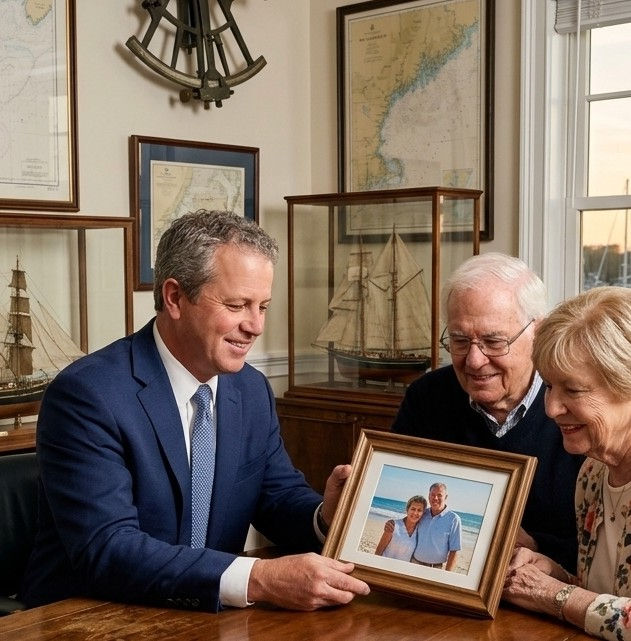
Family heirlooms play a unique role in that process because they are much more than personal possessions. They serve as powerful reminders of where we came from and of the individuals who helped shape our lives. A piece of jewelry, a collection of photographs, a military medal, or an antique piece of furniture often carries stories, traditions, and memories that connect one generation to the next. These treasured items provide a tangible link to family history and preserve a legacy that money alone cannot replace.
With thoughtful planning in place, heirlooms can continue to strengthen family bonds long after a loved one has passed away. Clear instructions and intentional distribution can ensure that these cherished possessions are received with appreciation and understanding, allowing family members to focus on the memories and values they represent. Without proper planning, however, the very same items can become sources of misunderstanding, resentment, litigation, and lasting division. What should serve as a symbol of family heritage can instead become a catalyst for conflict, underscoring the importance of addressing heirlooms as carefully as any other component of a comprehensive estate plan.
A Final Thought
As the Connecticut family's experience demonstrates, assumptions and verbal promises are rarely enough. Clear documentation, honest communication, thoughtful distribution strategies, and professionally prepared estate planning documents can protect both your possessions and your family's future.
Attorney Connelly offers a simple piece of advice: "If there is an item you know your family will treasure, do not leave its distribution to chance. A few conversations today and the right planning documents can spare your loved ones years of heartache tomorrow."
The greatest legacy most people hope to leave is not a collection of possessions. It is a family that remains united after they are gone. Proper planning can help ensure that your cherished heirlooms become symbols of shared memories and family pride rather than reminders of conflict and regret.

The materials and information presented in this blog are intended solely for general informational purposes and should not be interpreted as legal, financial, or healthcare advice. Because laws, regulations, and best practices evolve over time, the content may not always reflect the most current developments and should not be relied upon when making personal or professional decisions. This blog may include links to third‑party websites provided for the convenience of our readers. Connelly Law does not endorse, guarantee, or assume responsibility for the accuracy or reliability of external content. Some photographs or images appearing in this blog may be AI‑generated or stock imagery used for illustrative purposes only. Case studies shared herein are anonymized, contain no identifying information, and may be blended from multiple experiences to demonstrate common issues encountered in practice. Given the complexities of legal, financial, and healthcare matters, we strongly encourage readers to consult a qualified attorney, professional fiduciary advisor, or healthcare provider for guidance tailored to their specific circumstances. Your well‑being and ability to make informed decisions remain our highest priority.



Comments